
Diamond 4Cs
Diamonds are more than mere sparkling stones. Their quality, manufacturing methods, and benefits are all incredibly intriguing topics to learn about. As a diamond enthusiast, you must value diamond education as much as we do, which is why we have prepared a comprehensive guide for you.
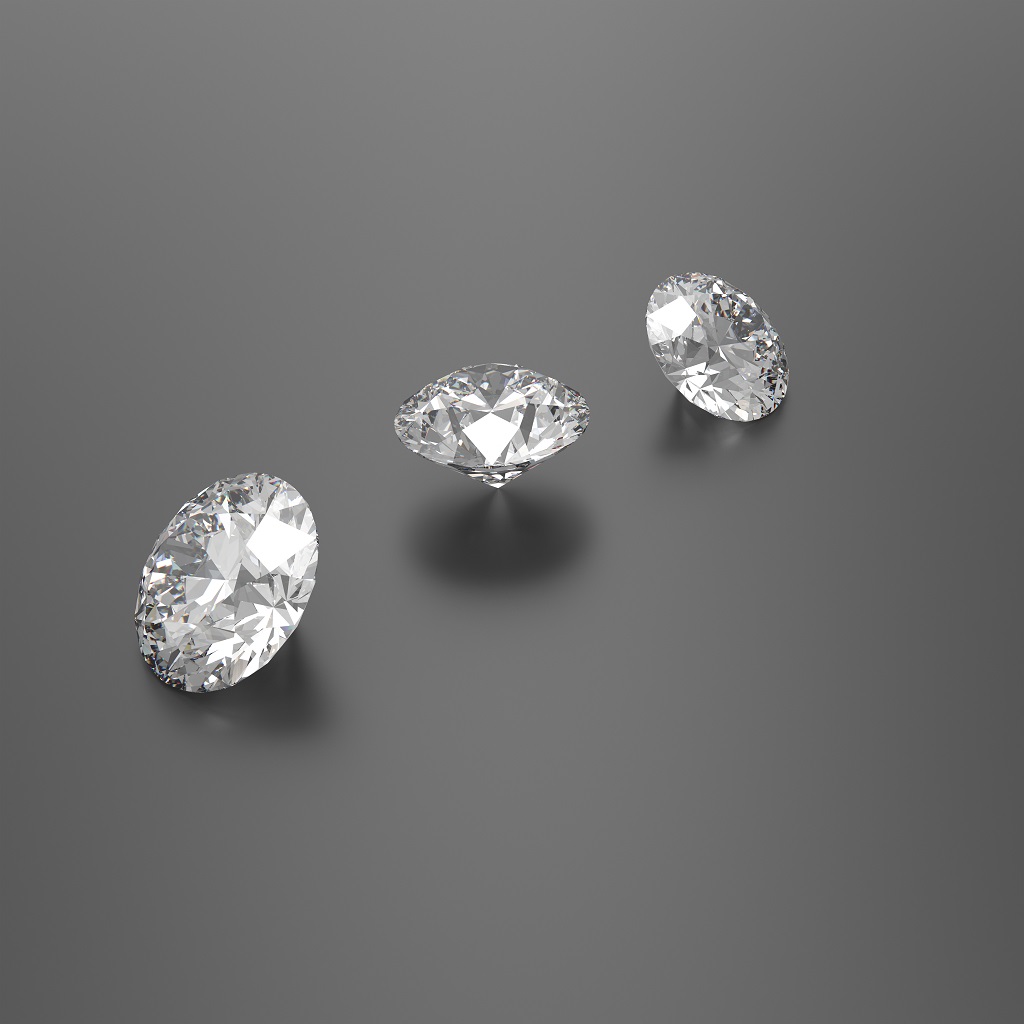
4Cs of Diamond
Every diamond lover knows about the Critical 4Cs because they are the primary factors you need to consider when buying a real diamond or a lab-grown diamond. The diamond’s rating on their scales determines how premium a diamond is, so let’s explore them:
Cut
Lab-grown diamonds are known for their ability to transmit light. Diamonds with well-cut facets reflect bursts of light. Out of the 4Cs, the diamond cut determines the beauty of the stone.
Three factors determine how good a cut is:
The Precision of the Cut
A diamond’s beauty depends on the precision of the diamond’s cut. Precise artistry and workmanship are required to ensure that the diamonds deliver unmatched sparkle.
Symmetry
A symmetrical diamond carries properly aligned and balanced facets. Asymmetrical diamonds appear dull and less sparkly.
Polish
Polish is a critical component of the diamond cut quality. It delivers the diamond the glorious return of light.
Color
Interestingly, diamond color is graded in terms of the absence of color. The lesser the color, the higher the cost of the diamond. If the diamond carries a yellow/brown tint, light performance will reduce, causing the diamond to display less sparkle.
Rating Criteria
Since the diamond’s color ranges on a spectrum between colorless and light yellow, the rating scale emulates the same principle. The quality can be anywhere between D-Z, with D being the best quality and Z being the lowest quality diamond. Following is the universal distribution scale:
♦ Colorless – D, E, F
♦ Nearly Colorless – G, H, I, J
♦ Faint Yellow – K, L, M
♦ Very Light Yellow – N, O, P, Q, R
♦ Light Yellow – S, T, U, V, W, X, Y, Z
Clarity
A diamond’s clarity refers to the purity of the stone and is usually determined by observing the diamond through loupes or magnifying glasses with a 10X microscope. The magnification allows the inspector to check for any flaws or blemishes inside and outside the diamond and rate it based on the number of imperfections they find.
Rating Criteria
Following are the ratings given to diamonds based on how perfect or imperfect they are:
♦ Flawless (FL) – perfect, no inclusions, no blemishes
♦ Internally Flawless (IF) – no inclusions, minor blemishes on the external surface
♦ Very Very Slightly Included (VVS) – minimal inclusion (flaws) that are undetectable to the untrained eye. Tiny number of microscopic inclusions that are very difficult to see even at 10x magnification
♦ Very Slightly Included (VS) – Very small inclusions in a diamond. Inclusions not visible to a naked eye and somewhat easy to see at 10x magnification to the trained eye
♦ Slightly Included (SI) – Small inclusions that are easy to see at 10x magnification but usually are not eye visible
♦ Included (I) – Small inclusion visible even to the naked eye
Carat
Diamond carat weight is the measurement of how much a diamond weighs and is the easiest of the 4Cs to determine. The larger the carat weight, the more the diamond’s cost.
Limerence is committed to providing you with premium quality lab-grown diamonds with some of the best ratings on the parameters mentioned above. We are passionate about contributing to the eco-friendly diamond industry.
Lab-Grown Diamonds
A lab-grown diamond is also sometimes referred as a synthetic diamond manufactured in a lab rather than extracted from a mine. It is manufactured in a lab under conditions mimicking the natural diamond-forming process, like high pressures and high temperatures, but with the assistance of advanced technologies.
Benefits of Lab-Grown Diamonds
There are several benefits of opting for a lab-grown diamond over a mined diamond, and some of them are mentioned below:
Ethically Sourced
One of the best benefits of lab-grown diamonds is that they are ethically sourced. You will never have to worry about indirectly contributing to exploitation when purchasing from us and can remain guilt-free. We are dedicated to creating a sustainable business that uplifts all stakeholders.
Higher Purity
Lab-grown diamonds are grown in controlled environments, making it easier to reduce the number of impurities. Diamonds developed using strict quality controls do not have any or negligible dirt or impurities ingrained in them. The formation in controlled environments ensures that they look brighter and whiter.
Eco-friendly
Lab-grown diamonds are gaining popularity all around the world due to their affordability and eco-friendly tag. They are an excellent alternative to mined diamonds because they are manufactured in controlled environments and are a far more sustainable option. Hence, you will not risk increasing your carbon footprint multi-fold by purchasing them from us.
Affordable
Lab-grown diamonds are created using the latest technologies. Hence, the process delivers high-quality diamonds at relatively cost-effective prices. You can enjoy wearing these gorgeous gems without putting a dent in your savings!
Contact Us
Are you excited about exploring the premium quality diamonds and services we have to offer? Please don’t hesitate to contact the Limerence Diamonds team on sales@limerencediamonds.com.au. We look forward to hearing from you.